About dkod
The dkod CLI is open source (MIT licensed) — a tool that captures every AI agent session into git so your team knows what every agent did and why.
AI agents are writing more code than ever. But the history of what they did — the prompts, the reasoning, the alternatives they considered — disappears the moment the session ends. When something breaks, you’re left reverse-engineering diffs with no context.
dkod is the missing layer: capture every session as a git ref, trace any line back to its prompt with dkod blame, flag scope creep with dkod drift, and search across your org with a team dashboard. Transcripts are never stored outside your git host.
Meet the founder
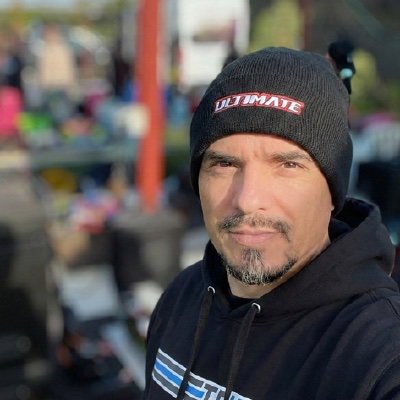
Haim Ari
AI Engineering & DevOps Lead Architect at Start.io
Founder of dkod. 15+ years as a DevOps engineer and team lead in ad tech, designing and operating large-scale production systems that handle millions of requests per second with low latency. Led infrastructure teams across Kubernetes and AWS — building CI/CD pipelines, multi-datacenter deployments, and auto-scaling architectures that keep real-time bidding platforms running at scale.
Now focused on AI engineering and developer tooling. Built dkod after watching agent transcripts vanish session after session — teams losing context on AI-authored code with no way to trace what happened. The same instincts that drove building observable infrastructure at scale now drive building observable infrastructure for AI agents writing code.
Writes about agentic development, Claude Code workflows, and AI engineering methodology at Vantage Academy.
Why dkod?
AI agents write code every day, but their work history disappears. dkod makes it permanent, searchable, and private.
Without dkod
- Agent sessions vanish after use
- No record of what the agent did or why
- Reverse-engineer diffs when something breaks
- Each developer's agent history is siloed
With dkod
- Every session captured as a git ref
- Full transcript, diff, and metadata preserved
- Line-level blame, drift checks, and cross-repo team search
- Transcripts never stored outside your git host
What we build
Three components, from your terminal to your team dashboard. Git is the source of truth at every layer.
dkod CLI
Rust binary that captures agent sessions into git refs. MIT licensed, works offline, supports 7 agents.
dkod Indexer
GitHub App that indexes session refs across your org. Metadata and embeddings only — transcripts fetched live via your token.
Team Dashboard
Cross-repo session search, per-author and per-repo views, org-wide visibility.
Our principles
Git Is the Source of Truth
Sessions are git objects. If the indexer disappears, you lose nothing — re-index from git. No vendor lock-in.
Privacy by Architecture
Transcripts are never stored outside your git host. The indexer stores metadata only. Content is fetched through your GitHub token.
Free Tools, Paid Visibility
The CLI is free forever. The team dashboard — cross-repo search and org analytics — is the business.
Agent-Agnostic
Works with any agent. Claude Code, Codex, Copilot CLI, Cursor, Factory droid, Gemini CLI, opencode. No vendor lock-in.
Join the community
Connect with developers building with AI agents at scale. Get help, share what you've built, and shape the future of AI-assisted development.
Discord
Chat with the team and community. Get help with setup, share feedback, and discuss agent session workflows.
Twitter / X
Follow for updates, architecture deep dives, and behind-the-scenes on building dkod.
GitHub
Star the repo, open issues, contribute code. The dkod CLI is open source under the MIT license.
FAQ
Git refs are portable, versioned, and already part of your workflow. Sessions push and fetch with standard git commands. If the indexer goes down, you lose nothing — everything is in the repo. No vendor lock-in, no data migration, no new backup strategy.
Yes. The CLI is fully standalone — zero account required. You get session capture, dkod log and dkod show for browsing, dkod blame for line-level provenance, and dkod drift for scope-creep checks. The team dashboard adds cross-repo search and org-wide visibility, but it's entirely optional.
Similar concept, different architecture. Log aggregators pull data into a central store. dkod keeps transcripts in git and indexes metadata only. The privacy model is the key difference — transcripts are never stored outside your git host.
Built in the open
The dkod CLI is MIT-licensed. Explore the source, open an issue, or start contributing.